


If you are trying to improve your website’s SEO, you have probably heard the term referring domain.
But what does it actually mean, and why does it matter? Many website owners focus only on backlinks without understanding how referring domains play a separate and important role.
This article breaks down what referring domains are, how they work, how to check them, and how to build more of them the right way.
It also covers common mistakes to avoid and practical tips for getting better results. With the right approach, referring domains can make a real difference in how your site ranks.
What Is a Referring Domain?
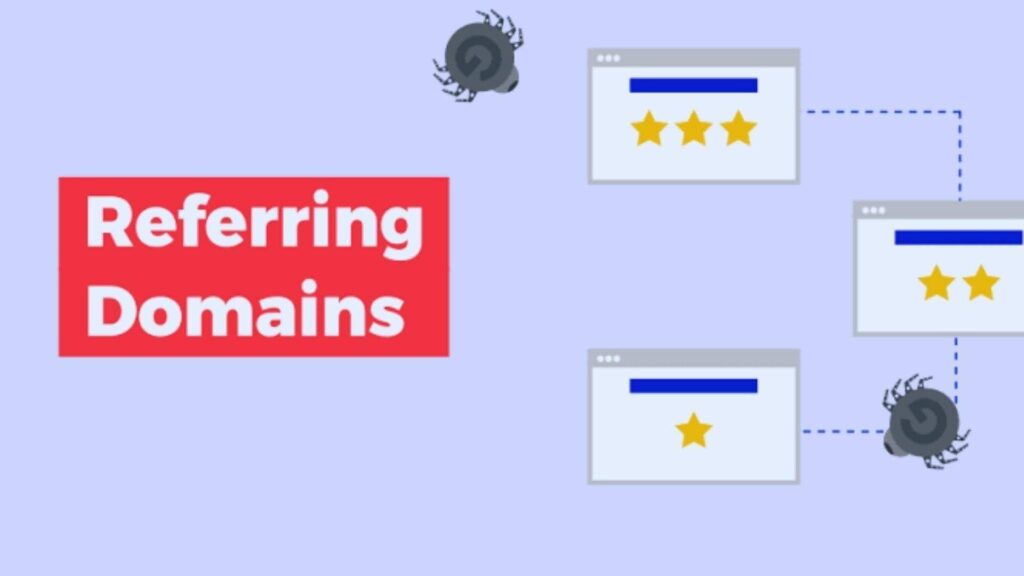
A referring domain is any website that links to your website at least once. It does not matter how many links come from that site. If one website sends five links to yours, it still counts as one referring domain.
Think of it as a vote of trust. When another website links to you, it signals to search engines that your content has value. The more trustworthy and relevant those linking sites are, the stronger that signal becomes.
When a site links to yours, it passes some level of trust through those links. This is called link equity. Search engines use it to measure how authoritative your site is. Sites with more high-quality referring domains tend to rank better because they appear more credible.
Each domain is counted once, no matter how many links it sends. If one website links to your site 10 times, that is 10 backlinks but only one referring domain.
If 10 different websites each link to you once, that is 10 referring domains. The second scenario is stronger for SEO because the links come from a wider range of sources.
Referring Domain vs. Backlink vs. Linking Domain
These three terms are related but not interchangeable. Confusing them can lead to wrong conclusions when you analyze your link profile.
| Feature | Backlink | Referring Domain | Linking Domain |
| What it is | A single hyperlink pointing to your site | The website that contains one or more backlinks | An external website that links to yours |
| How it is counted | Every individual link is counted separately | Each domain counted once, no matter how many links it sends | Each domain counted once, same as referring domain |
| Can one source produce many? | Yes, one site can send dozens of backlinks | No, one site equals one referring domain | No, one site equals one linking domain |
| Tool terminology | Used across all SEO tools | Common in Ahrefs and Semrush | Common in Google Search Console |
| SEO weight | More backlinks from one site give diminishing returns | More diverse domains carry stronger overall signals | Same SEO value as referring domain |
| Example: one cooking site links 3 times | 3 backlinks | 1 referring domain | 1 linking domain |
| Example: food blog and health site each link once | 2 more backlinks (5 total) | 2 more referring domains (3 total) | 2 more linking domains (3 total) |
| Why it matters | Shows total link volume | Shows domain diversity and breadth | Shows how many independent sources trust your site |
Referring domain count often tells a more complete story than backlink count alone because it reflects how many independent sources are willing to link to your content.
Why Are Referring Domains Important for SEO?

Referring domains are one of the strongest signals search engines use to evaluate your site.
More high-quality referring domains generally mean better authority, better rankings, and more organic traffic.
How Referring Domains Can Strengthen Your Backlink Profile
When many different websites link to you, your backlink profile looks natural and credible. A profile built on links from hundreds of different sources is much harder for competitors to replicate.
It also shows search engines that your content has earned attention from a wide range of people.
A strong referring domain count signals that your site is trusted across your industry, not just by one or two outlets.
Why Domain Diversity Matters
Getting 100 links from one website does not have the same SEO impact as getting links from 100 different websites. Domain diversity tells search engines that many independent sources consider your content valuable.
Google has confirmed that it looks at the overall pattern of who links to you. A diverse set of referring domains looks more natural and trustworthy than a large number of links from just a few sources.
How Referring Domains Can Support Organic Traffic and Rankings
More referring domains from relevant, authoritative websites can lead directly to higher rankings in search results. Higher rankings bring more organic traffic.
Some referring domains also send direct referral traffic, meaning readers click those links and visit your site.
Both of these outcomes are valuable. One builds your long-term SEO, and the other brings visitors right away.
Why Quality Matters More Than the Number of Referring Domains
A single link from a well-known, authoritative source in your industry can do more for your SEO than dozens of links from low-quality sites.
Search engines are good at identifying low-quality or manipulative links and may ignore or even penalize sites that rely on them.
Chasing raw numbers without considering quality is one of the most common mistakes site owners make.
What Makes a High-Quality Referring Domain?

Not all referring domains carry the same value. Understanding what separates a strong referring domain from a weak one helps you focus your efforts where they will actually count.
Relevance to Your Website or Industry
A link from a site in your niche carries more weight than a link from an unrelated site. If you run a fitness blog, a link from a health magazine is more relevant than one from a travel website.
Relevance helps search engines confirm that your content genuinely belongs in the conversation around your topic.
Authority and Trustworthiness
Sites with higher domain authority and a solid reputation pass more link equity. You can check authority using tools like Ahrefs (Domain Rating) or Moz (Domain Authority).
A link from a government site, a major publication, or a respected industry resource is generally very strong.
Organic Traffic and Audience Quality
A referring domain that gets real, organic traffic is a good sign.
It shows the site has an engaged audience and is not just a link farm or an empty website created for the purpose of building links.
Link Placement and Context
Links placed naturally within the body of an article, surrounded by relevant text, carry more weight than links hidden in footers, sidebars, or generic directories.
The context around the link matters. If the surrounding content is closely related to what you do, the link is more meaningful.
Natural and Editorial Links
The best links are ones you earn because someone found your content genuinely useful. These editorial links are the kind Google values most.
They were placed by choice, not paid for or arranged through link schemes.
Signs of a Low-Quality or Spammy Referring Domain
Watch out for these red flags:
- Very low or no organic traffic
- Thin or irrelevant content
- Links mixed in with many unrelated sites
- No clear editorial standards
- Heavy use of exact-match anchor text pointing to many different sites
- A domain that exists mainly to sell links
If you receive links from sites like these, they could hurt your SEO rather than help it.
How to Check Your Referring Domains
You do not need to guess where your links are coming from. There are free and paid tools that show you exactly which domains are linking to your site.
How to Find Referring Domains in Google Search Console
Google Search Console is free and gives you data straight from Google.
Here is how to find your referring domains:
- Log in to Google Search Console.
- Select your property.
- Go to the “Links” section in the left sidebar.
- Under “External links,” you will see your top linking sites.
This shows you which domains link to your site most often. You can also see which pages on your site receive the most external links.
How to Analyze Referring Domains With SEO Tools
Paid tools like Ahrefs, Semrush, and Moz give you a more detailed view. You can filter by domain authority, anchor text, follow vs. nofollow, date acquired, and more.
These tools also show you historical data so you can track growth or drops over time.
What Metrics Should You Evaluate?
When reviewing referring domains, look at:
- Domain Rating or Domain Authority (how strong the linking site is)
- Organic traffic of the referring site
- Relevance to your industry
- Whether the link is dofollow or nofollow
- The anchor text used
- When the link was first found
How to Check Your Competitors’ Referring Domains
In Ahrefs or Semrush, enter a competitor’s domain and go to their referring domains report. This shows you every site linking to them. You can sort by authority, traffic, or date to find the best opportunities.
Look for patterns. Which types of sites link to your competitors most often? Are there directories, industry blogs, news sites, or resource pages that appear repeatedly? Those are the same types of sites you should target.
How to Get More High-Quality Referring Domains
Building a strong referring domain profile takes time. But with the right strategy, you can earn links that genuinely move the needle.
Create Content Worth Linking To
The most reliable way to earn referring domains is to publish content that people naturally want to link to.
This includes in-depth guides, original research, industry data, free tools, and resources that solve real problems. If your content is the best answer to a question in your niche, other sites will reference it.
Use Competitor Referring Domain Analysis
Look at who links to your competitors and ask yourself if those same sites would link to you.
Many of them will, especially if your content is comparable or better. Reach out and offer your resource as an alternative or additional reference.
Find Link Opportunities Through Content Gaps
If your competitors have links from sites covering topics you have not written about yet, that is a gap worth filling.
Create content on those topics and reach out to the same sites.
Build Relationships With Relevant Websites
Link building often comes down to relationships. Follow relevant blogs, engage with their content, and reach out when you have something genuinely useful to share.
A simple, personalized email explaining why your content adds value to their audience goes a long way.
Earn Links Through Digital PR and Expert Contributions
Being quoted as an expert in your field is a reliable way to earn high-quality referring domains.
You can use services like HARO (Help a Reporter Out) or connect directly with journalists in your niche. When publications quote you, they usually link back to your site.
Use Guest Posting Strategically
Guest posting on relevant, reputable blogs can earn you a referring domain while also getting your content in front of a new audience.
Focus on quality sites in your industry, and make sure your contribution genuinely adds value. Avoid low-quality sites that accept any content just for the sake of a link.
Promote Original Research, Data, and Resources
Original data is one of the most link-worthy types of content. If you conduct a survey, compile industry statistics, or create a free tool, other sites in your niche will often reference and link to it.
Even a well-designed template or checklist can earn links if it solves a common problem in your industry.
How to Evaluate and Prioritize Referring Domain Opportunities

Not every link opportunity is worth pursuing. Knowing how to rank your options saves time and gets better results.
Which Referring Domains Should You Target First?
Start with sites that are already relevant to your industry, have solid organic traffic, and link to your competitors.
These are low-hanging fruit because you know they are open to linking to content like yours. Resource pages, roundups, and industry directories are also good starting points.
How to Balance Authority, Relevance, and Traffic
A very high-authority site that has nothing to do with your industry may be less valuable than a mid-authority site that is closely related to what you do.
Relevance and traffic should be part of your evaluation alongside authority scores.
When a Lower-Authority Domain Can Still Be Valuable
Do not dismiss a site just because its domain authority score is low.
If it has a real, engaged audience, strong topical relevance, and editorial standards, it can still be a worthwhile referring domain.
New websites sometimes grow quickly, and early links from them can become more valuable over time.
How to Avoid Chasing Referring Domain Numbers
It is tempting to try to get as many referring domains as possible. But a sudden spike in low-quality links can trigger a manual penalty or an algorithmic filter from Google.
Focus on consistent, steady growth through high-quality sources instead of trying to hit a specific number fast.
Common Referring Domain Mistakes to Avoid
Many site owners make the same errors when trying to grow their referring domain count. Avoiding these mistakes puts you in a much stronger position.
- Buying or Manipulating Backlinks: Paid links that pass PageRank violate Google’s guidelines and can lead to manual penalties or ranking drops. Legitimate link building takes more time but delivers results that actually hold up.
- Relying on Irrelevant or Spammy Websites: A link from a low-quality or unrelated site is not neutral and can pull your site’s credibility down. If your link profile is full of spammy sources, Google will trust your site less over time.
- Focusing Only on Domain Authority: Domain authority is a third-party metric, not an official Google signal, so a high score does not always mean a high-quality site. Always look at traffic, relevance, and editorial standards alongside any authority score.
- Overusing Link Exchanges: Reciprocal linking is not always wrong, but doing it at scale creates patterns that Google can easily identify as manipulative. Keep link exchanges limited and focus on building links that flow naturally.
- Building Too Many Links With the Same Anchor Text: A link profile where most backlinks use the exact same keyword-rich anchor text looks forced and unnatural to search engines. Mix in branded, generic, and partial-match phrases to keep things balanced.
How Many Referring Domains Do You Need?
There is no single number that works for every website. The right amount depends on your industry, your competitors, and what you are trying to rank for.
A local business blog may rank well with 50 referring domains. A competitive SaaS website might need thousands.
To find your benchmark, look at the top three to five pages ranking for your target keywords and check their referring domain counts using a tool like Ahrefs or Semrush. Your goal is to be competitive with those numbers while maintaining quality.
If competitors have 200 referring domains and you have 50, you need to grow your profile. If the gap is small, quality matters more than quantity.
Focus on earning links from authoritative, relevant sites rather than adding weak ones. This becomes especially important when you are targeting high-difficulty keywords.
Referring Domains and Backlink Profile: How to Build a Healthy Balance
A strong backlink profile is not just about the number of referring domains. It is about how everything fits together.
How Multiple Backlinks From One Domain Differ From Links From Multiple Domains
Getting several links from one strong referring domain does help, but each additional link from the same source gives diminishing returns. The first link from a domain carries the most value. Additional links from that same domain add less and less over time.
This is why expanding your referring domain count is so important. Each new domain brings fresh link equity.
How to Maintain a Diverse and Natural Link Profile
A natural link profile includes a mix of:
- Links from different types of sites (blogs, news, directories, forums)
- Different anchor texts (branded, generic, keyword-based)
- Links pointing to different pages on your site, not just the homepage
- A mix of dofollow and nofollow links
- Links built gradually over time, not all at once
If your profile looks like it was built overnight or follows an obvious pattern, it raises flags with search engines.
How to Monitor New and Lost Referring Domains
Tracking changes in your referring domains is just as important as building them. Set up alerts in Ahrefs or Semrush to notify you when you gain or lose referring domains. Check your profile at least once a month.
If you notice a referring domain disappearing, you can reach out to the site to find out why. Sometimes links are removed by mistake or because a page was updated.
Other times, the site may have gone offline. Knowing about lost links helps you decide if it is worth trying to recover them.
Expert Tips for Building a Strong Referring Domain Profile
Use these practical tips to build a referring domain profile that actually supports long-term SEO growth.
- Prioritize topically relevant websites because a link from a site in your niche carries far more weight than one from a high-authority site with no subject overlap. Search engines use relevance as a trust signal.
- Create assets that naturally attract links by publishing original studies, free tools, or data-driven articles that others in your industry find genuinely useful. Even one or two strong assets per year can bring in steady referring domains.
- Focus on long-term relationships instead of one-off link requests because a single connection with an editor or site owner can lead to multiple links over time. Consistent engagement pays off far better than cold outreach campaigns.
- Audit your referring domain profile every few months to catch low-quality or spammy links that may have appeared without your knowledge. If you find harmful domains, disavow them in Google Search Console right away.
- Track new and lost referring domains on a regular schedule so you always know what is changing in your link profile. Losing a strong referring domain without noticing can quietly hurt your rankings over time.
Conclusion
Referring domains are a core part of any solid SEO strategy. They signal trust, authority, and relevance to search engines, and they can directly impact your rankings and traffic.
The key is to focus on quality over quantity, build genuine relationships, and create content that earns links naturally. Start by checking your current referring domains, then look at what your competitors have and find the gaps. Apply what you have learned here step by step.
If this guide helped you, feel free to share it or leave a comment below. You can also explore related articles on link building and SEO to keep building on this foundation.
Frequently Asked Questions
Can referring domains from social media platforms help with SEO?
Social media links are almost always nofollow. They do not pass link equity directly but can drive traffic and indirectly support visibility.
How long does it take for a new referring domain to affect rankings?
It varies, but Google typically takes a few weeks to crawl and index a new link before any ranking effect becomes noticeable.
Should you disavow all low-quality referring domains?
Only disavow links that are clearly spammy or manipulative. Disavowing clean links by mistake can actually harm your site.
Do internal links count as referring domains?
No. Referring domains only count external sites linking to yours. Internal links connect pages within the same website and are counted separately.
Is it possible to have too many referring domains?
Having many referring domains is generally positive if they are legitimate. Problems arise only when links are low-quality, irrelevant, or acquired manipulatively.